
Practice 03 / 05
Generate on site and use less
Terminal electrical loads are large and inescapable. Site lighting, cranes, boilers, and specialized buildings push annual consumption to 1.5 million kWh at the top end, and EV charging is adding a new load on top. This practice covers three ways to manage that load: on-site solar generation, LED lighting conversions, and charging infrastructure for vehicles and equipment.
The Short Version
The energy a terminal uses is the energy it can save
Terminals and industrial distribution facilities run 30 to 200 acres, with annual electrical use between 500,000 and 1,500,000 kWh. Depending on location and utility rates, that is a $5,000 to $20,000 monthly bill. Every part of that load, from high-mast lighting to buildings to equipment in the yard, is a place where energy can be cut, generated on site, or managed better.
LED conversions typically cut lighting energy by 50 to 70 percent and deliver the most immediate savings on site. A lower load reduces the size of the solar system needed to offset what remains and frees electrical capacity for EV chargers. Planned together rather than one at a time, solar, lighting, and charging save more than any of them would alone.
50-70%
lighting energy reduction from led conversions
8–10 W
DC output per square foot of solar panel
50,000+ hrs
rated life of led fixture
50–350 kW
DC fast charger output per port
Inside This Practice
Three systems that shape the load.
01 · Solar PV
The best solar site may be the vehicle lot
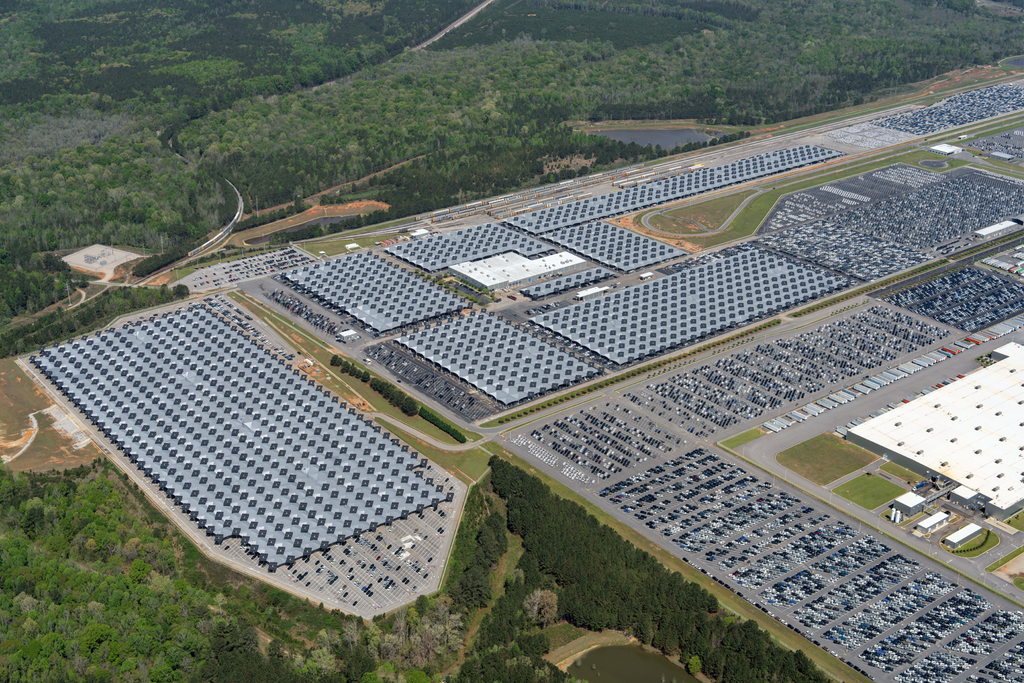
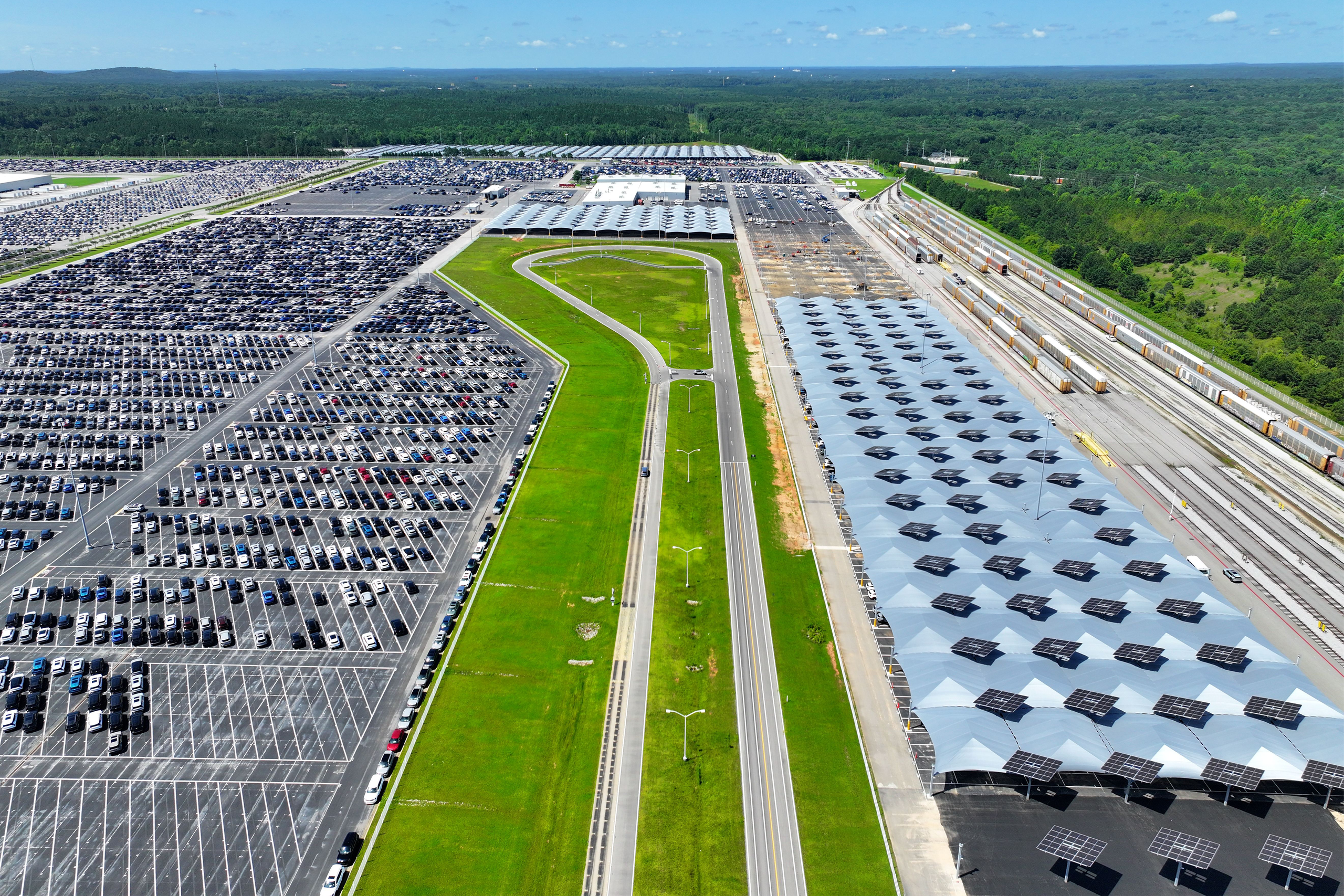
Most terminals have far more paved storage area than roof area. Solar canopies built over vehicle rows turn that space into generation with little loss of storage capacity. They also protect the vehicles beneath them from sun and hail, and they place generation next to the chargers that will draw on it.
The fundamentals are the same wherever the panels go. Photovoltaic panels produce direct current, an inverter converts it to AC for on-site use or export through a production meter, and output planning starts at roughly 8 to 10 watts DC per square foot of panel with south-facing, unobstructed exposure. Rooftops on processing and maintenance buildings and ground-mount arrays on unused land are the other options. Rooftops need a structural check before any layout work begins.
Canopies cost more per watt than rooftop or ground-mount systems because of the steel structure, so the case rests on the added value of shade and protected storage. Panels typically carry 25-year warranties. Utility interconnection rules and net-metering policy determine how much exported power is worth, so check them early.
Canopies · Rooftop · Ground-Mount · Interconnection
02 · led lighting
The cheapest kilowatt-hour is the one you never use
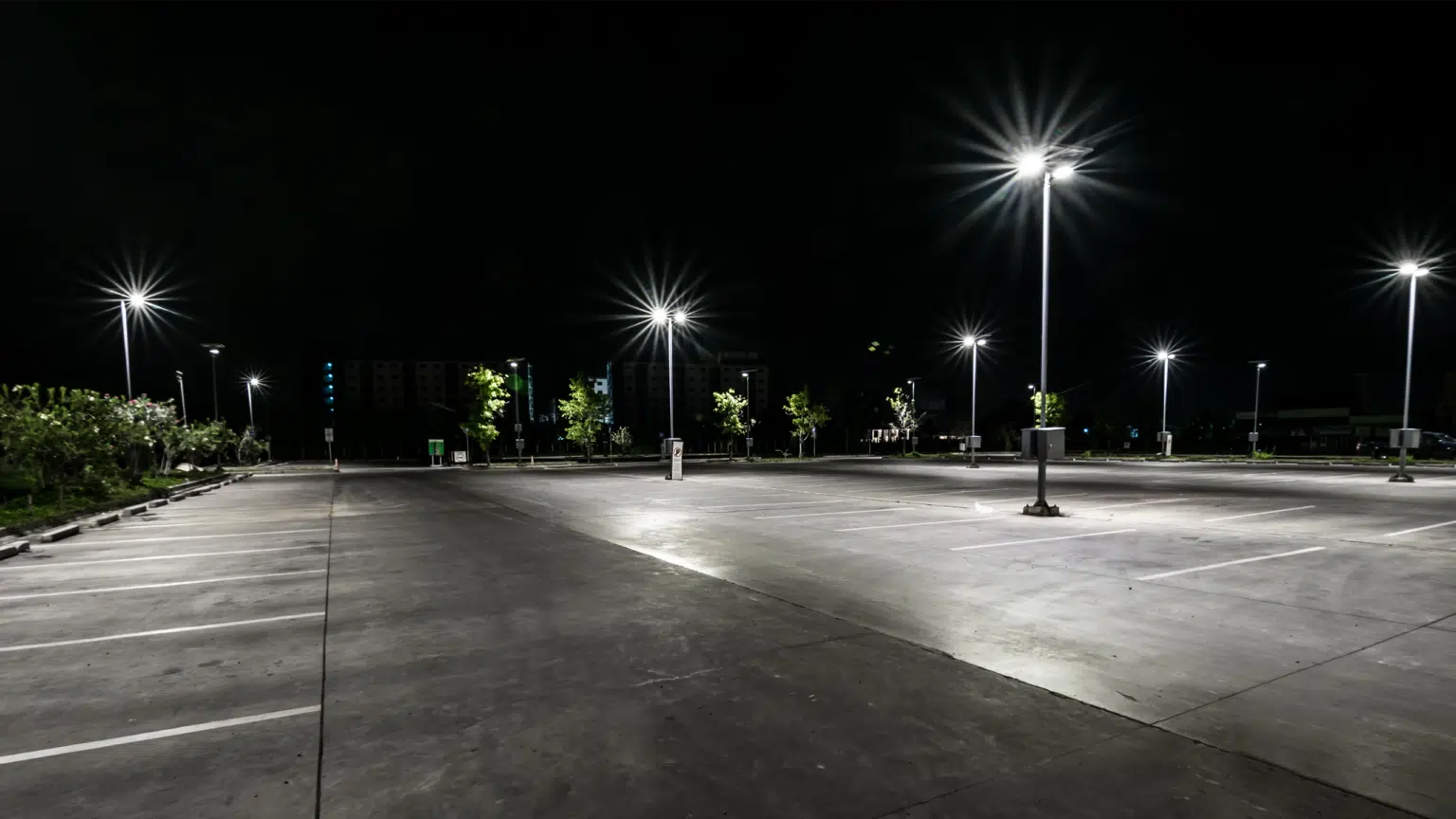
Site lighting is one of the largest and most constant loads at a terminal. High-mast poles and area lights run every night of the year, and many still use metal halide or high-pressure sodium fixtures drawing 400 to 1,000 watts each. Converting to LED typically cuts lighting energy by 50 to 70 percent. Controls such as dimming, motion sensors, and scheduling add further savings, and the same approach applies to interior lighting in processing and maintenance buildings.
Maintenance is the other half of the case. LED fixtures are rated for 50,000 to 100,000 hours, compared with roughly 10,000 to 24,000 for metal halide and high-pressure sodium, which means far fewer lift trips to service a high-mast pole. Many utilities offer per-fixture rebates for conversions, and every kilowatt saved on lighting frees electrical capacity for charging.
Hi-Mast · Interior · Controls · Utility Rebates
03 · ev charging
Electrical vehicles are here
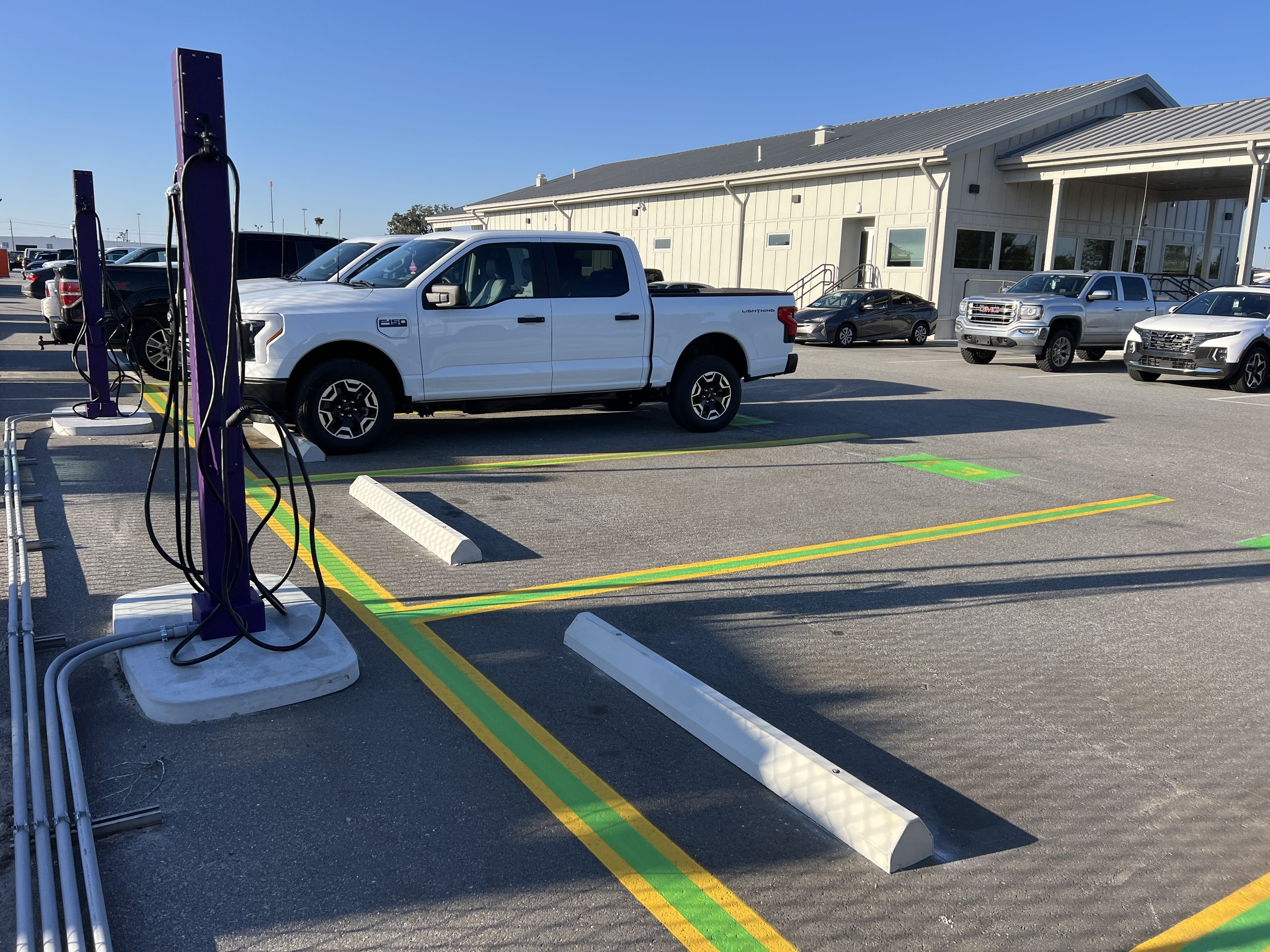
Terminals now handle a growing number of electric vehicles. EVs ship at a reduced state of charge, and units held in storage may need charging to meet manufacturer requirements before delivery. Electric yard equipment, such as terminal tractors and forklifts, adds a second charging need. Level 2 chargers, at roughly 7 to 19 kW, suit vehicles that sit for hours. DC fast chargers, at 50 to 350 kW, suit equipment that has to turn around quickly.
The constraint is usually the electrical service, not the charger. A bank of fast chargers can exceed what a site’s existing service can deliver, and a utility upgrade can take a year or more. Demand charges from fast charging can also outweigh the cost of the energy itself. Load management, phased installation, and pairing with on-site solar reduce both problems.
Level 2 · DC Fast · Load Management · Make-Ready
Partner With Us
Running the solar numbers?
Tell us your site size and load profile and we will share the financing comparisons and incentive references that apply.