
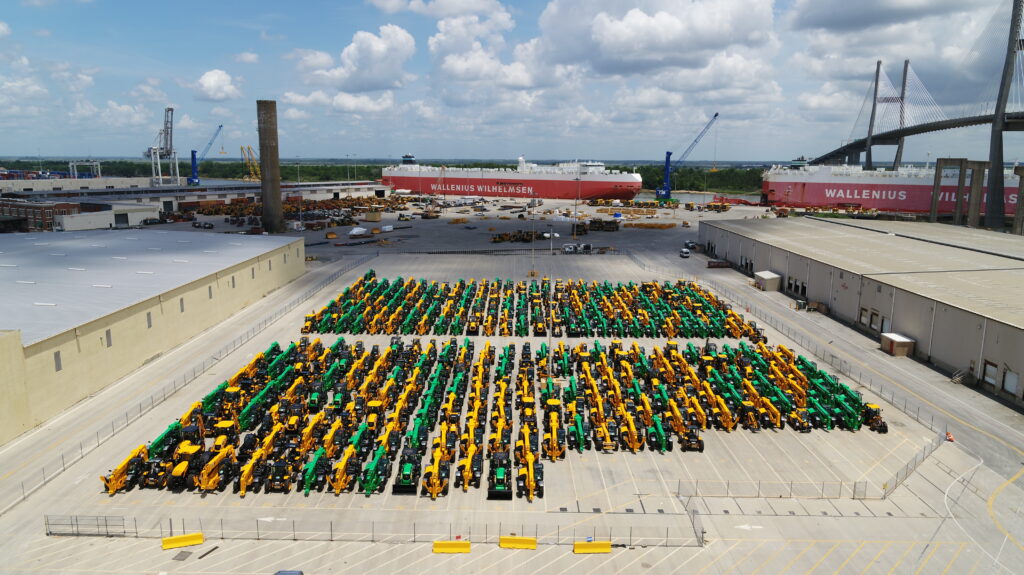
Practice 05 / 05
Design for the terminal that is coming.
Vehicle terminals are adding automated movement, AI-assisted cameras, and yard software that decides where every vehicle goes. Each one changes how space is used, how people work, and what the site needs underneath it. We learn how these systems actually function so the layout supports them instead of getting in their way.
The Short Version
The holding pen for what is not yet standard practice.
Terminal technology is moving faster than terminal design. Yard management software now assigns parking locations and tasks in real time, cameras can inspect and track vehicles on their own, and automated movement is moving from pilot projects toward daily operations. Most of these systems arrive after the site is built, and many are held back by layouts that were never planned for them.
Our role is to understand how each system works well enough to plan around it: where it needs power and data, how it routes vehicles, what space it frees up, and what space it needs that a conventional terminal does not. That understanding feeds directly into vehicle flow, space allocation, and the design of buildings and yards.
Not every system will earn its place. Some will scale and some will stay niche. The planning decisions that keep options open, such as conduit, connectivity, and flexible layouts, are cheap now and expensive later.
Inside This Practice
Ideas that reshape the yard.
01 · Automated Vehicle Movement
Cars can now move themselves
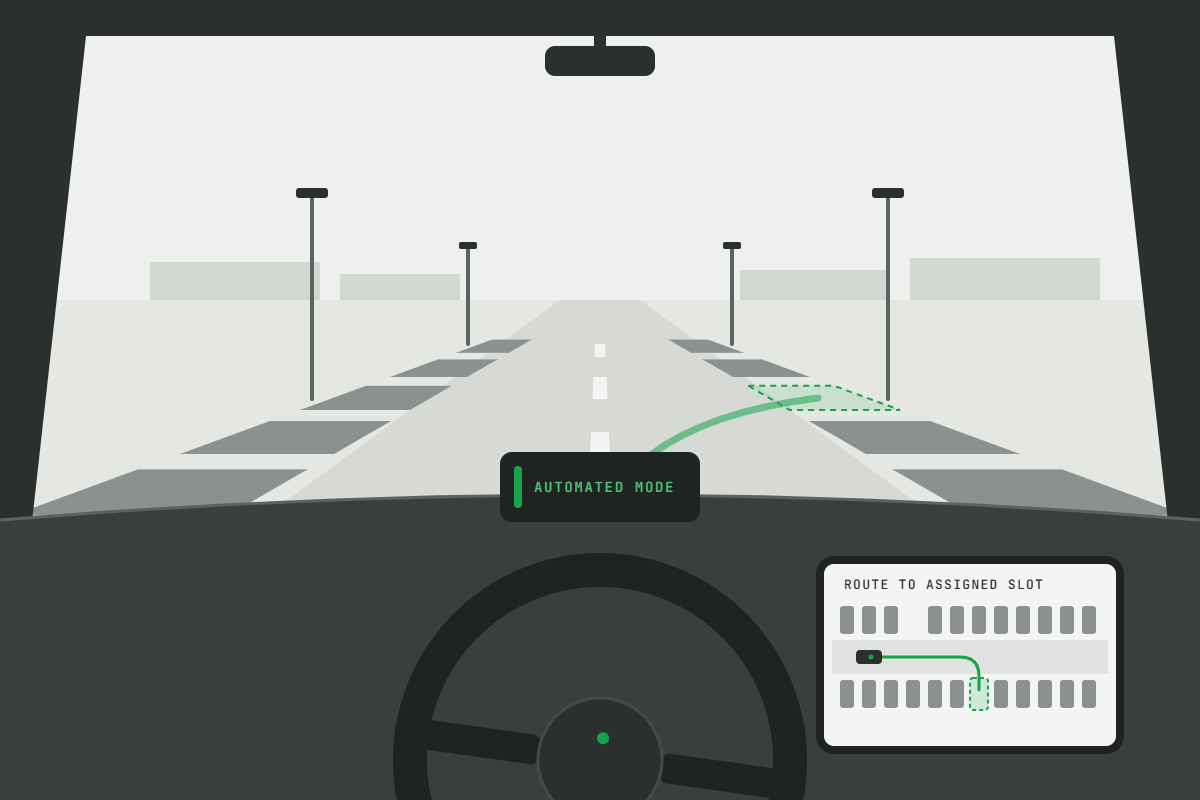
Two approaches are emerging. Parking robots slide under a vehicle, lift it by the wheels, and carry it to its assigned spot. Other systems let new vehicles drive themselves between processing steps, using their own sensors and onboard software under the supervision of a central control system. Both reduce the number of drivers needed and the shuttle trips that carry them back and forth.
Both also change the layout. Robots can park vehicles closer together because no one needs to open a door, which raises storage density. Automated routes need predictable lanes, clear markings, reliable connectivity, and separation from people and manual traffic. Terminals that plan for those zones now can phase automation in without rebuilding the yard.
02 · AI & Yard Management
Software that sees the yard and runs it
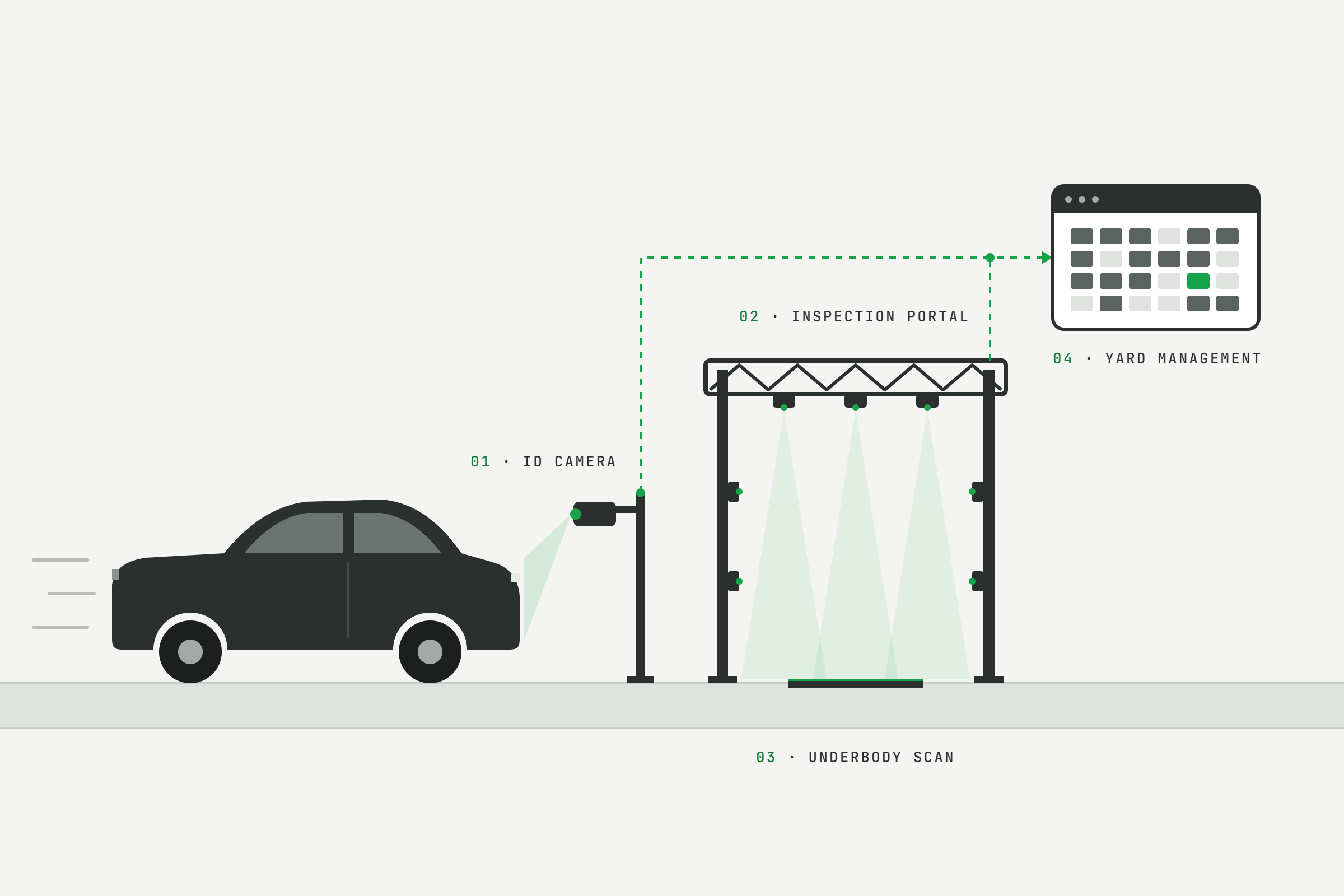
Yard management is moving from spreadsheets and radios to real-time platforms that know where each vehicle is, assign it a parking location, dispatch the driver or robot that moves it, and sequence it for processing and loading onto rail, truck, or vessel. AI-enabled cameras give that system eyes, interpreting what they see as it happens to support security, safety, inventory, and vehicle condition.
We work to understand how these systems function, because their logic should shape the layout and the layout should support them. Row and stall numbering, zone boundaries, staging areas, camera coverage, power, and data connections all affect how well the system performs, and all are far easier to build into a master plan than to add after the yard is paved.
03 · workforce
People and machines in the same yard
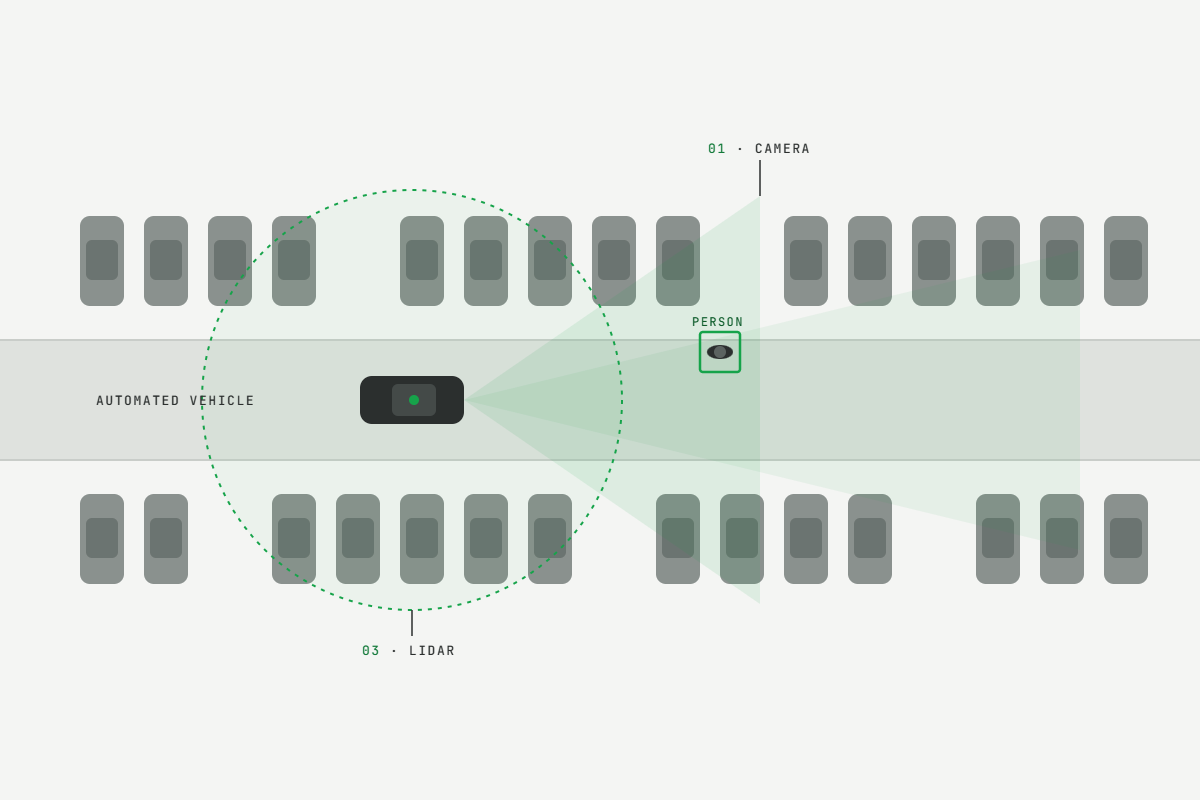
Automation will not replace a terminal’s workforce overnight. For years, most terminals will run mixed operations, with human drivers, automated moves, and shuttle vans sharing the same lanes. That transition is the hardest period to plan for, because the site has to work safely and efficiently for both at once.
The jobs change as the mix shifts. Fewer people drive vehicles and ride shuttles between rows, while more supervise systems, maintain equipment, and handle exceptions from a central operations room. We plan each phase so the layout works on opening day and keeps working as automation takes on more of the yard: separated walkways and crossings, operations and training space, and driver facilities that can shrink without a rebuild.
Proven In The Field
Where this practice has shipped.
Partner With Us
Evaluating something new for your terminal?
If you are weighing a technology this page covers, or one it should, we will share what we have seen in service before you commit capital.