
Case Study · Energy Efficiency
Charging that keeps the yard moving
Over the past decade, TransDevelopment has planned and overseen the installation of 68 charging points at five vehicle and cargo terminals for four clients. Most people picture passenger cars when they hear “EV charging.” At these terminals, the larger share charges heavy-duty electric forklifts and fleet trucks. The rest charges finished vehicles before shipment and as well as for company truck fleet.
-
Client
-
Wallenius Wilhelmsen, CN, Mazda, Toyota, AutoWarehousing Group
-
Facility
-
Brunswick, GA; Lake Orion, MI; Tacoma, WA; Baltimore, MD; Huntsville, AL
-
Practice
-
Energy Efficiency
-
TDG Role
-
Needs assessment, charger placement and site design, procurement, installation oversight
the short version
Project Summary
A terminal yard is laid out for traffic: car carriers, shuttle drivers, forklifts, trucks, and heavy equipment moving between berths, buildings, and storage. Every charger adds a pedestal, a parking position, and a power run that the yard has to work around. Put one in the wrong place and it blocks a lane, idles a forklift, or needs power the site does not have.
Most of these installations were straightforward: a few Level 2 chargers or a forklift charger at a processing building. Others involved more detailed site planning and flow scenario modeling. At its Brunswick, Georgia terminal, Wallenius Wilhelmsen needed 47 charging points across eight location, most of them high-power DC units for heavy-duty electric forklifts and fleet trucks. The chargers serve both its automotive business and high-high business lines. We started with a needs assessment of the whole terminal, then laid out each charging location around the machines that would use it and how they move through the yard. We then oversaw the complete installation of all 47 chargers as a design-build development manager.
KEY STATS
| Site | Client | Year | Level 2 | DC fast | 480V |
| Brunswick, GA | Wallenius Wilhelmsen | 2024–26 | 14 | 31 | 2 |
| Lake Orion, MI | CN | 2026 | 10 | — | — |
| Tacoma, WA | Wallenius Wilhelmsen | 2018 | 5 | — | 1 |
| Baltimore, MD | WW (Dundalk); AWC Fairfield | ~2015 | — | — | 3 |
| Huntsville, AL | Mazda Toyota Manufacturing | 2020 | — | — | 2 |
| Total: 68 | 29 | 31 | 8 |
the full story
Project Overview
What Gets Charger
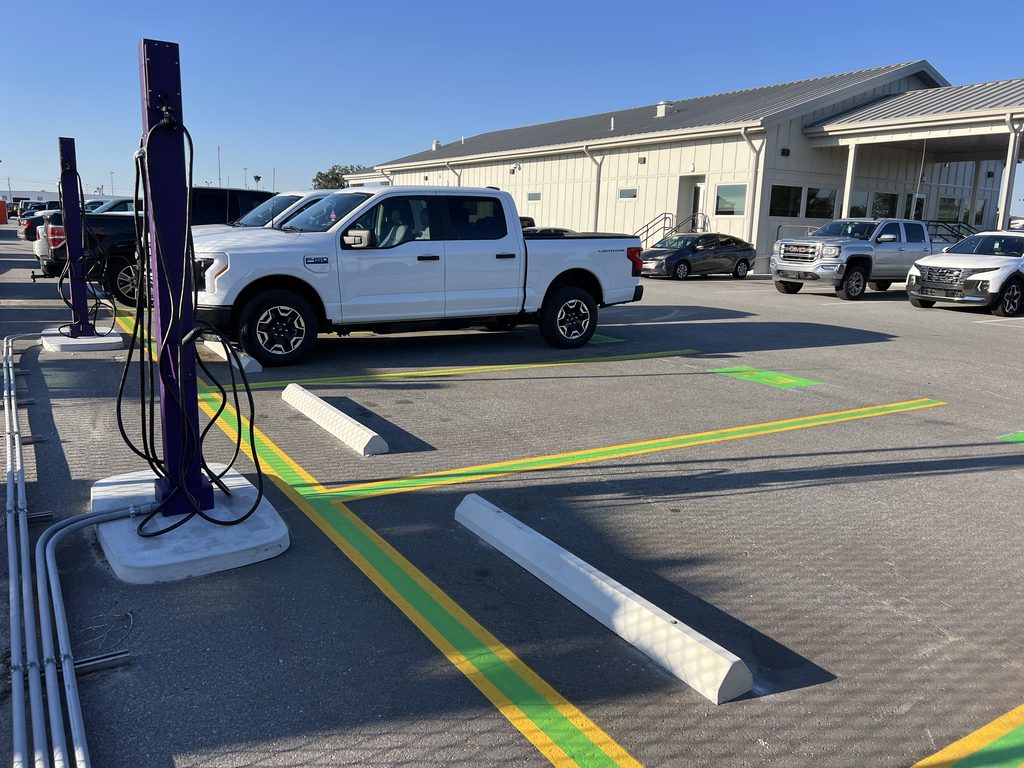
Level 2 chargers top up finished vehicles at processing buildings before they leave the terminal, at Brunswick, Tacoma, and Lake Orion. A vehicle in processing sits for hours, which matches the time a Level 2 charger needs. Six more Level 2 ports at Brunswick’s administrative building charge the terminal’s F-150 Lightning pickups.
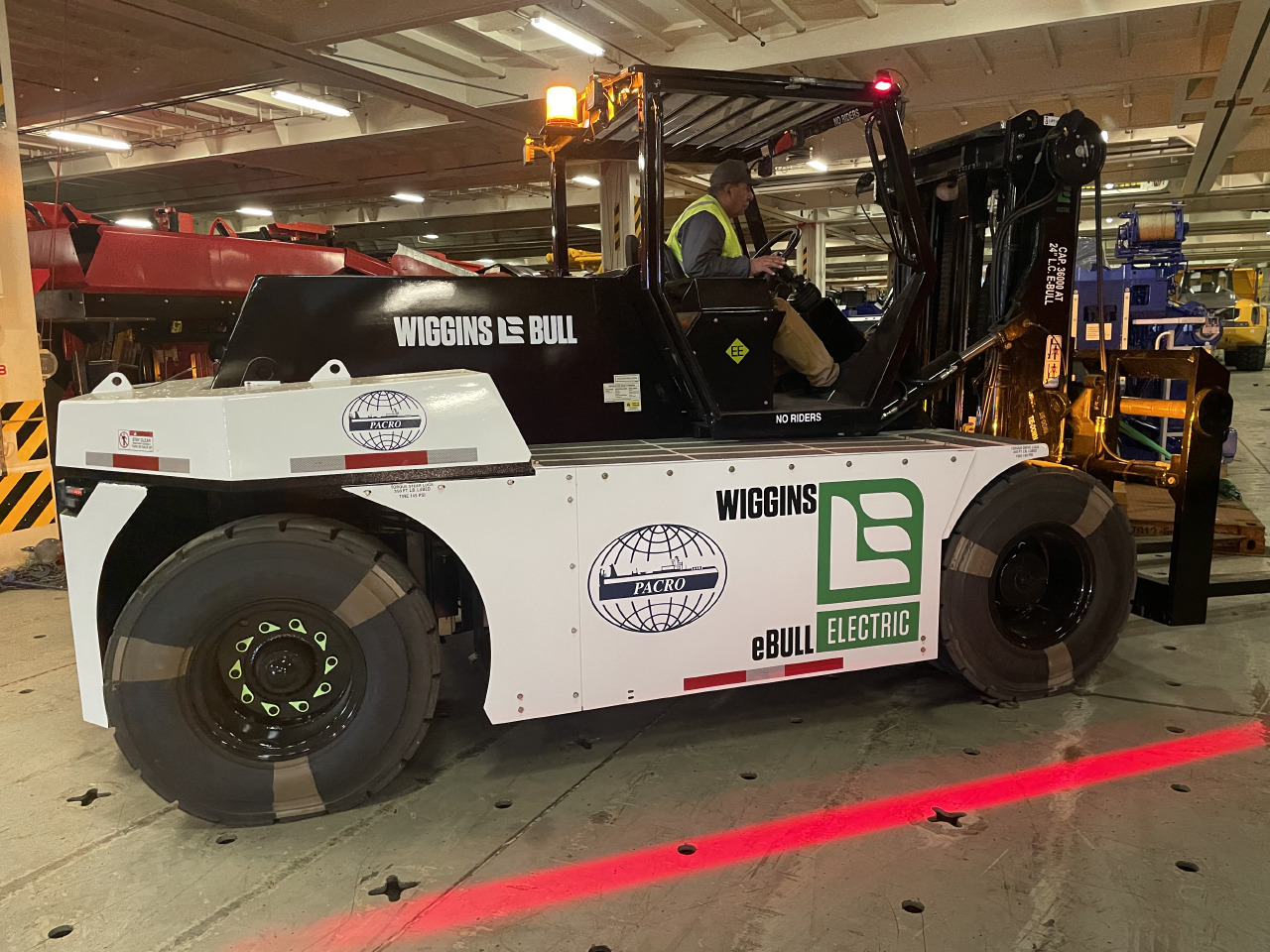
Heavy-duty electric forklifts move cargo and heavy equipment across the yard, and the client runs a fleet of electric trucks. These machines carry very large batteries, and the terminal operates almost continuously, so there is little time between shifts to recharge. Level 2 would leave them parked too long. At Brunswick they charge on 50 to 120 kW DC units at the berth, the crane pad, and the machinery processing buildings. At Tacoma, Baltimore, and Huntsville, forklifts charge on 480V forklift chargers at the processing buildings.
Our Role
At every site, our role was help deliver the client’s charging needs in the most efficient and cost-effective way. We assessed what needed charging, where it works, and how many positions it needs. We set charger locations and designed the bays, islands, pedestals, striping, and protection. In some cases we also helped the client select and procure the chargers, coordinated with the equipment manufacturers on the machines being charged and with the utility on service and transformers, and oversaw installation.
Brunswick: 47 Charging Points, Eight Locations, Two Business Lines
Wallenius Wilhelmsen’s Brunswick terminal handles finished vehicles alongside high and heavy cargo. The work began with a needs assessment across the terminal, mapping where yard vehicles, high and heavy equipment, and vehicle processing would need charging, now and later. Between 2024 and 2026, over several phases, charging went in at eight locations.
Most locations needed new electrical service. At Berth 3 and the South Machinery building, the load required upgraded transformers from Georgia Power, which we coordinated with the utility.
No two locations had the same constraints, so no two pedestals were the same. We designed a custom pedestal for each, modeled how vehicles and forklifts would move to and from the chargers, and integrated the chargers with the buildings they serve and with the terminal’s data and communications systems.
Sizing Each Bay to the Machine
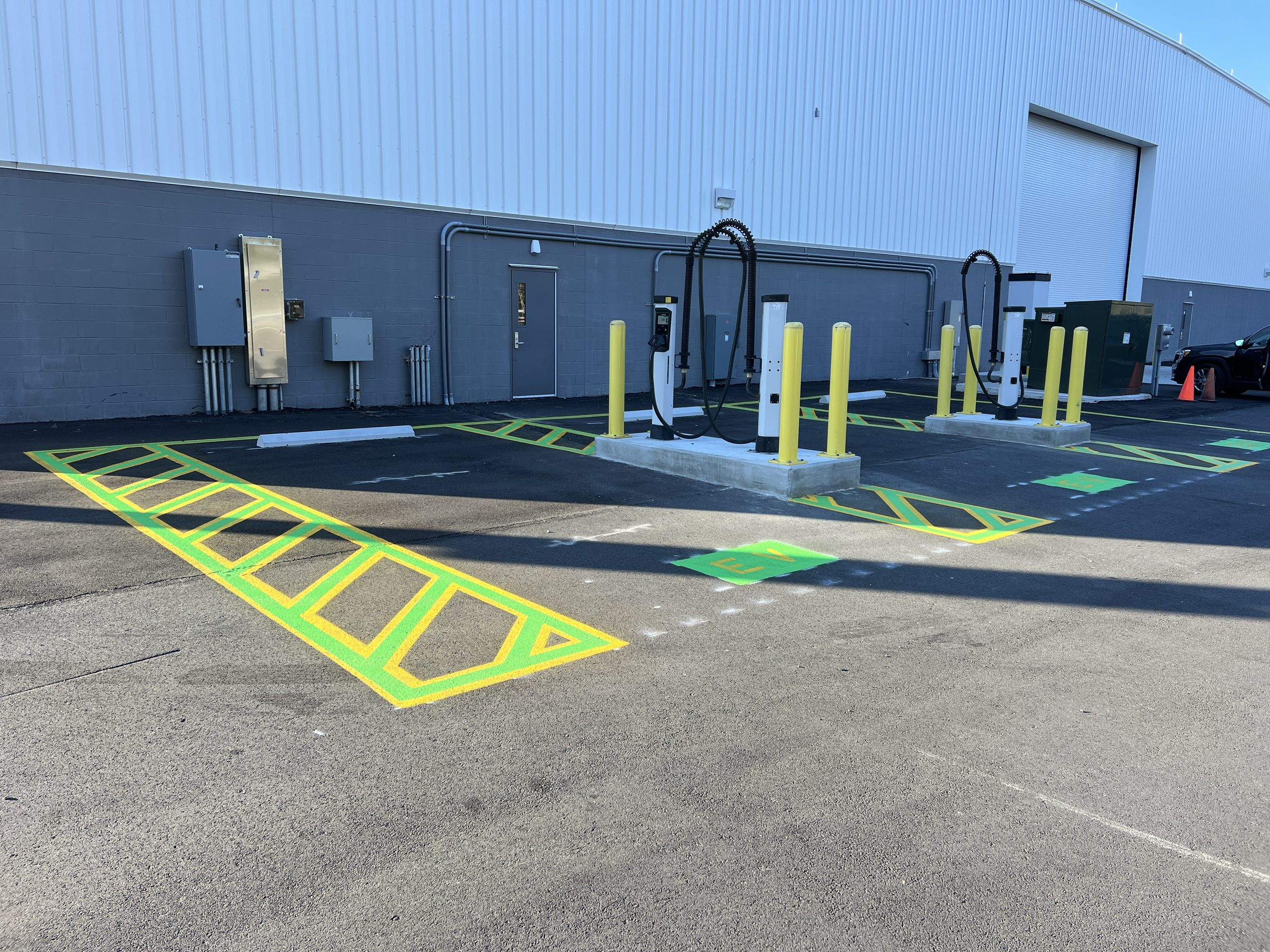
The North Machinery building shows how the layout was done. Charging bays are set in rows off concrete charger islands beside the building, and each bay is sized to the forklift that uses it: 15 by 35 feet for the Hyster J360s, which are nearly 26 feet long, and 12.5 by 25 feet for the smaller J155s. Four 120 kW and two 60 kW Zerova chargers, each with two ports, sit on the islands between rows. The layout works around an existing light pole and fire hydrant, keeps the warehouse overhead door clear, and leaves room for a larger Kalmar machine if the client adds one later. The building’s 75 kVA transformer was upgraded to 500 kVA to carry the load.
Charging Trucks with the Trailer Attached
For the client’s electric fleet trucks, we studied three alternative locations around a new fleet maintenance building and fuel island before settling the layout. In the charging block, 80 foot long trucks park in 15-foot lanes alongside concrete islands, with the charger positioned at the cab so the trailer can stay hitched. Each island carries three conduits, for DC power, data, and control, back to shared cabinets and a single transformer and panel.
The Other Locations
The other installations were simple. At Lake Orion, 10 Level 2 ports sit at the edge of CN’s site, close to a loading pad, to charge outbound vehicles. At Tacoma, five Level 2 chargers and a forklift charger sit outside the vehicle processing building for easy access. At Baltimore and Huntsville, 480V forklift chargers serve the processing buildings. Each was placed where the work already happens.
68
Charging ports INSTALLED at five terminals
75 to 500 kVA
EV charger transformer requirements
Up to 120 kW
PER CHARGING PORT
Project Gallery
Partner With Us
Which pillar fits your terminal?
Tell us about your facility and we will point you at the practices and case studies that apply.