
Case Study · Energy Efficiency
Hail protection that generates its own power.
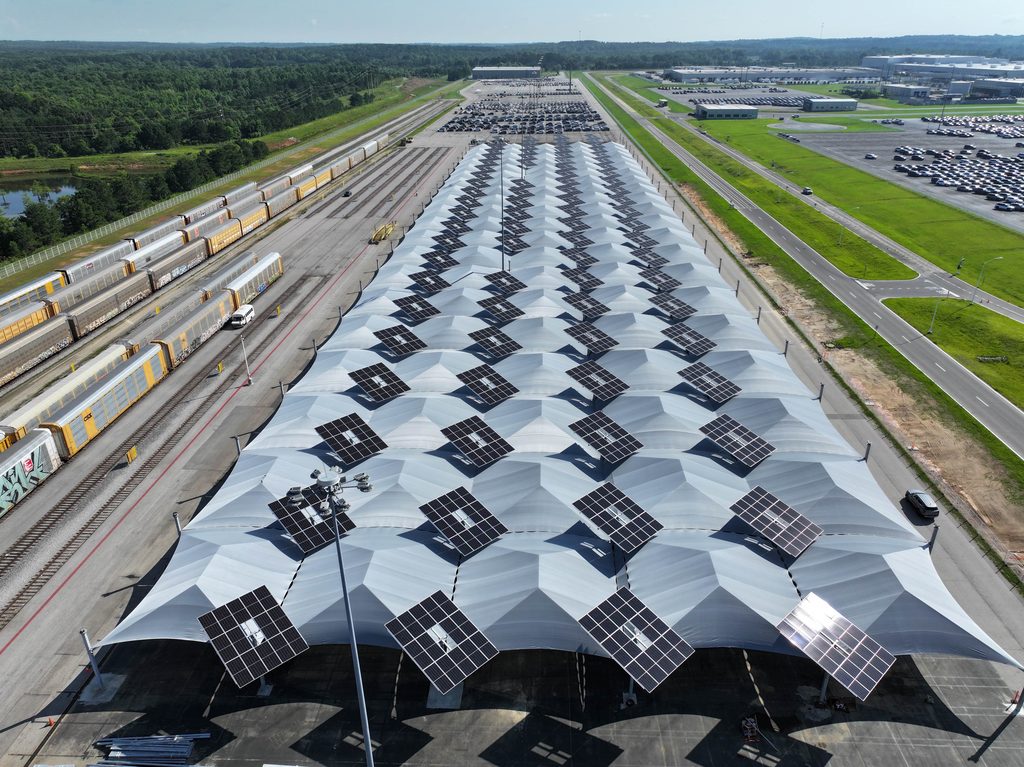
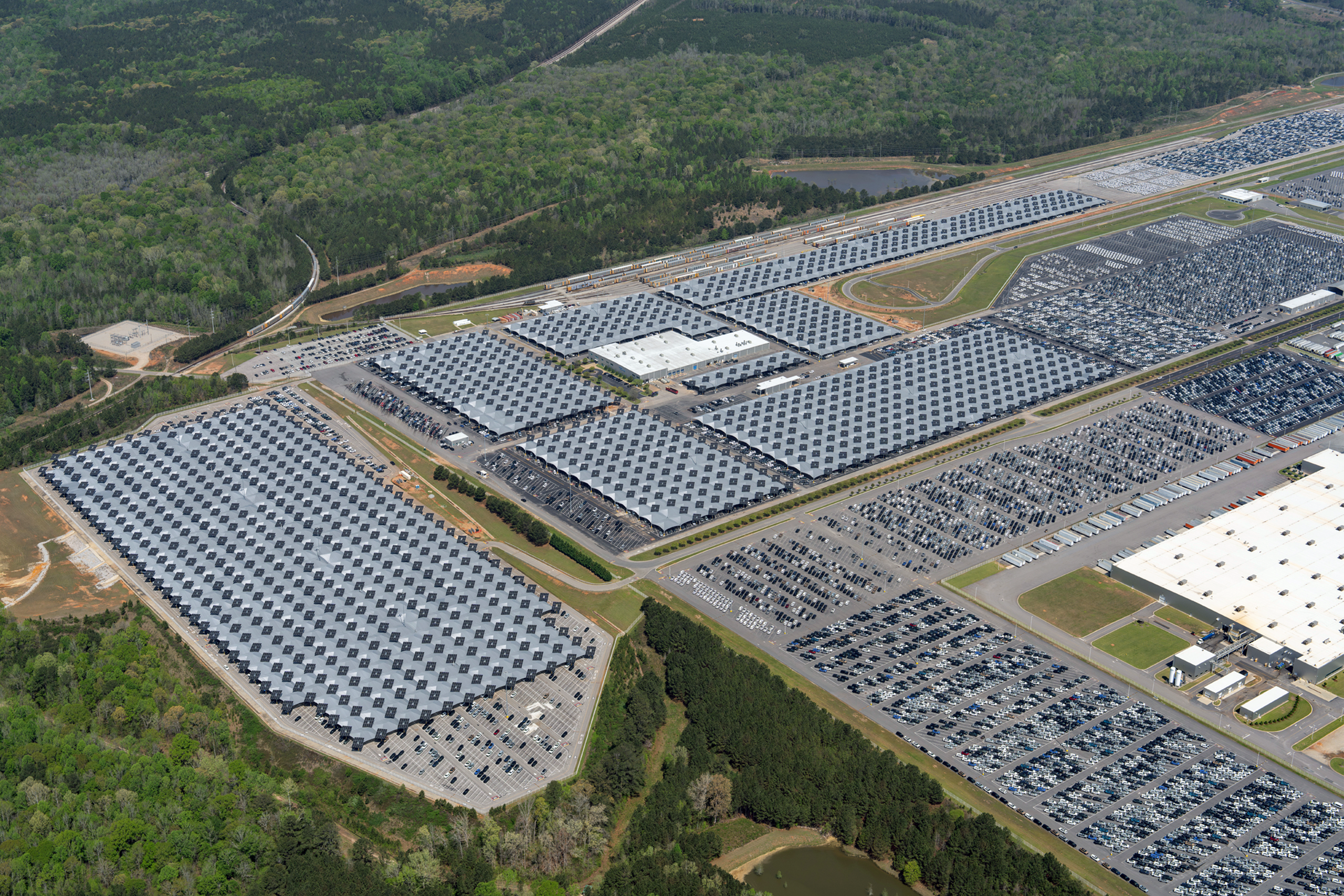
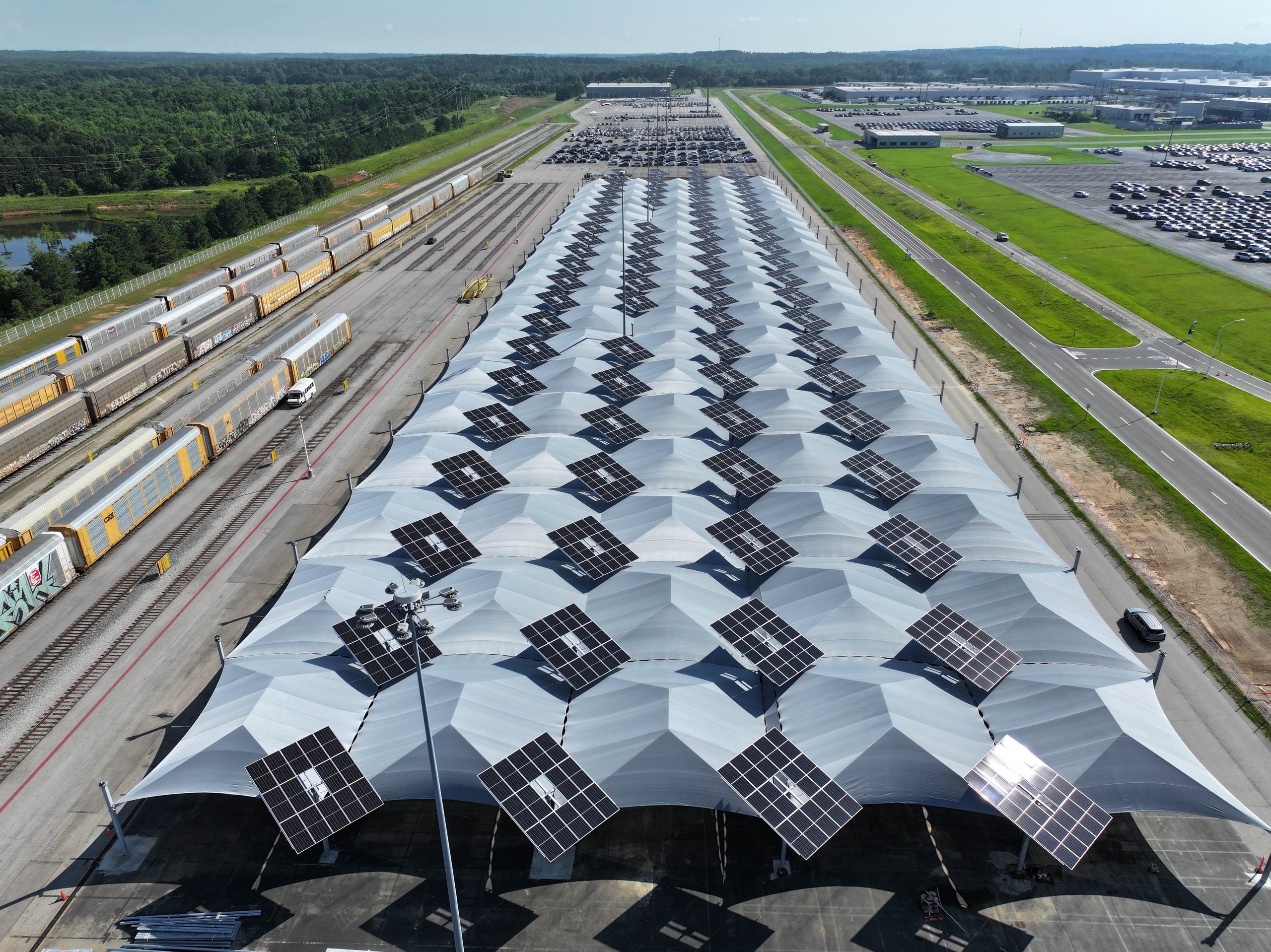
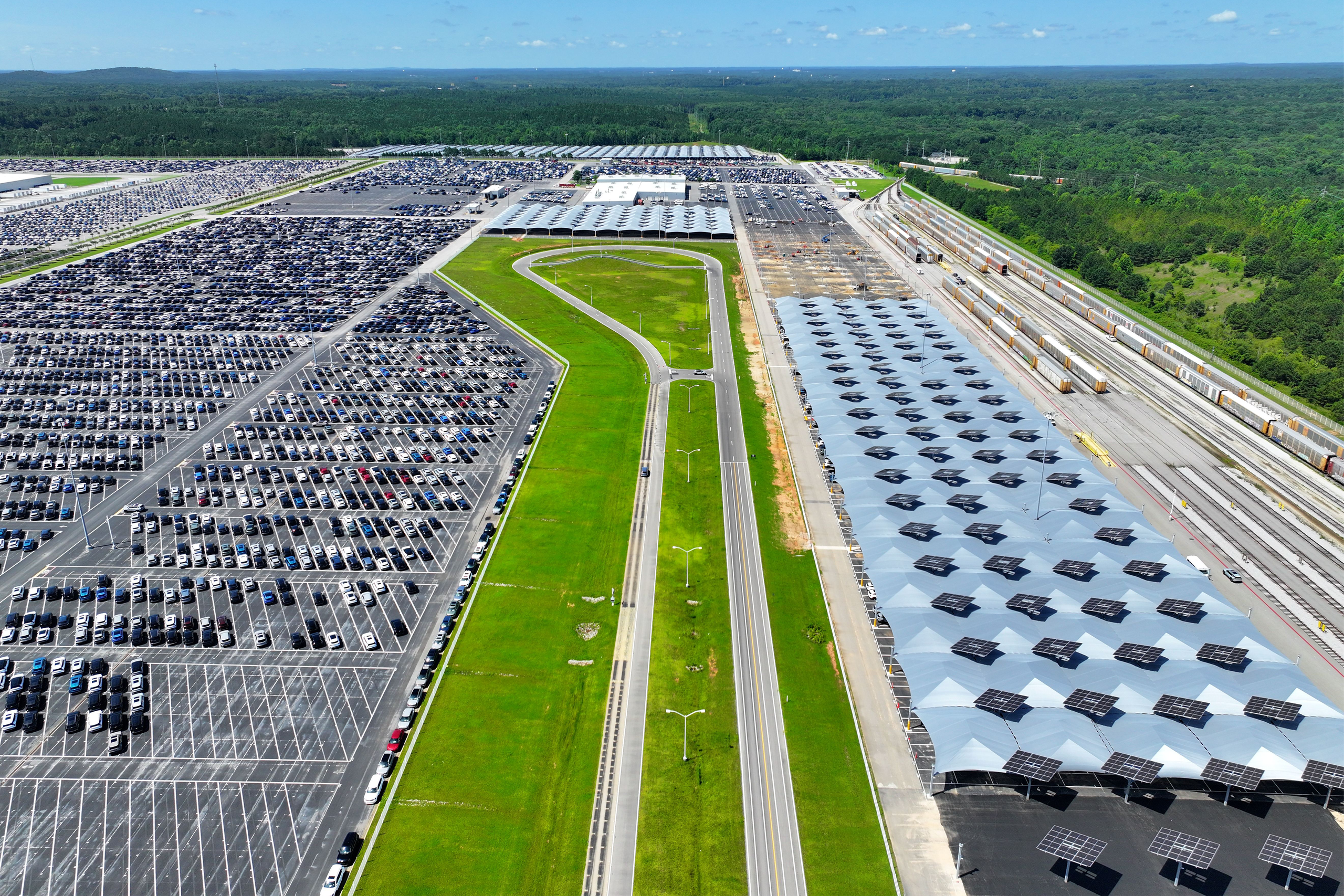
At Kia’s West Point, Georgia assembly plant, a 3.2-million-square-foot canopy now covers the finished-vehicle storage lots. The structure does two jobs. Hail netting protects vehicles waiting to ship, and 17,000 bifacial solar panels on the same columns generate more than 10 megawatts, roughly a tenth of the plant’s electricity. TransDevelopment designed the facility layout under the canopy and managed the pavement striping.
-
Client
-
Kia
-
Location
-
West Point
-
Practice
-
Energy Efficiency
-
TDG Role
-
Layout & design
the short version
Project Summary
In March 2023 a hailstorm damaged more than 13,000 vehicles at the West Point plant. The repair bill was only part of the cost: the storm disrupted shipments for months afterward. The response was a permanent roof over the storage lots.
Hail protection needs columns and a structure overhead. Once that structure is justified by what it protects, adding solar panels to it is a marginal decision, not a separate solar project, and it uses no additional land. The question stops being “can we afford a solar array?” and becomes “what does it cost to add panels to the roof we are building anyway?”
KEY STATS
- 3.2M sq ft of covered storage (about 75 acres)
- 10+ MW of on-site solar capacity
- ~10% of the plant’s electricity
- 17,000 bifacial solar panels
- 120 days to complete the first section
“The solar-powered hail canopy solution from VPS will help protect our vehicles, support the Kia Georgia team, and generate power on-site.”
– Stuart Countess, President & CEO, Kia Georgia
the full story
Project Overview
Background
Kia’s assembly plant in West Point, Georgia ships finished vehicles to dealers by rail and truck. Between the end of the assembly line and outbound shipment, those vehicles are held in large outdoor storage yards. Like most automotive facilities, the plant is located where land values cannot justify multilevel parking structures, so inventory has traditionally been stored in the open.
In March 2023, that exposure became a measurable cost. A single hailstorm damaged more than 13,000 vehicles at the plant. The impact reached well beyond repair costs: the event disrupted the supply chain for months and delayed deliveries of customer-ready vehicles. The question for Kia was no longer whether to protect its inventory, but how to do it across the entire storage operation.
Solution
Kia selected Vehicle Protection Structures (VPS) and TransDevelopment to deliver a permanent hail protection system over the storage yards. The two firms worked hand in hand throughout the project. VPS designs and builds the hail nets and supporting structures. TransDevelopment leads the planning around them: developing the conceptual plans, laying out the storage yards, determining column placement, setting the striping arrangement, and serving as the primary interface with Kia from concept through completion.
The project combines protection and power generation in a single structure. Hail netting spans the storage areas, and bifacial solar panels are integrated into the structural columns in a “solar tree” configuration. Bifacial panels collect sunlight on both faces, capturing light reflected up from the pavement as well as direct sunlight from above. The panels were manufactured in Georgia by Qcells, with Georgia Power and Solmotiv among the project partners. The system generates power behind the meter, so the plant uses the electricity directly.
TransDevelopment Scope
At a finished vehicle facility, the yard layout determines how many vehicles can be held, how efficiently they move between processing and loading, and how safely drivers and equipment circulate. A canopy introduces a permanent column grid into that layout, so column locations, parking rows, and drive aisles have to be planned together. TransDevelopment set the column placement with VPS in coordination with the yard layout, rather than fitting the yard around a structure designed on its own.
At West Point, the canopy was installed over storage yards that were already in use. Instead of planning the structure into a new facility, the layout had to be reworked around the new column grid. TransDevelopment reworked the parking rows and drive aisles around the new column grid and developed the striping arrangement to match, so the yards continue to operate as a working storage facility
The Results
The first section of the canopy was completed in just 120 days, and the full installation was dedicated on April 24, 2026. The completed structure covers 3.2 million square feet of vehicle storage, approximately 75 acres. It carries more than 10 megawatts of solar generation from approximately 17,000 bifacial panels and supplies roughly 10 percent of the plant’s electricity, making it one of the largest behind-the-meter solar canopy projects in the Southeast.
30%
Federal Investment Tax Credit on system cost
30–50%
Upfront cost offset with incentives stacked
8–10 W
DC output per square foot used for array sizing
15–20 yrs
PPA contract term modeled in the comparison
Project Gallery
Sample gallery for layout review: five images with a lead image. Select any image to open it full size.
Partner With Us
Weighing solar at your facility?
We will share the siting checklist and the financing comparison framework this proposal was built on.