
Case Study · Water Systems
Porous asphalt at terminal scale.
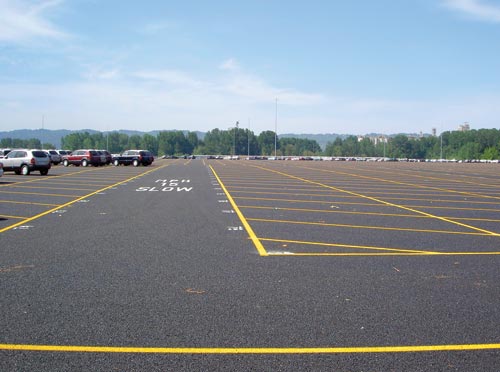
The Port of Portland’s Terminal 6 expansion put porous asphalt to work on a container terminal, built to specifications refined by Cahill Associates. The pavement is the drainage system: storm water infiltrates through the wearing surface into a stone bed below, and the pipe network a conventional lot would need largely disappears.
-
Client
-
Port of Portland
-
Facility
-
Terminal 6
-
Practice
-
Water Systems
-
Spec Basis
-
Cahill Associates
The Short Version
The surface does the work the pipes used to do.
Porous asphalt keeps most of the structural character of conventional pavement while letting storm water pass straight through. Runoff temperature, velocity, volume, and pollutant load all drop, and surface ponding during critical storm events is almost entirely eliminated.
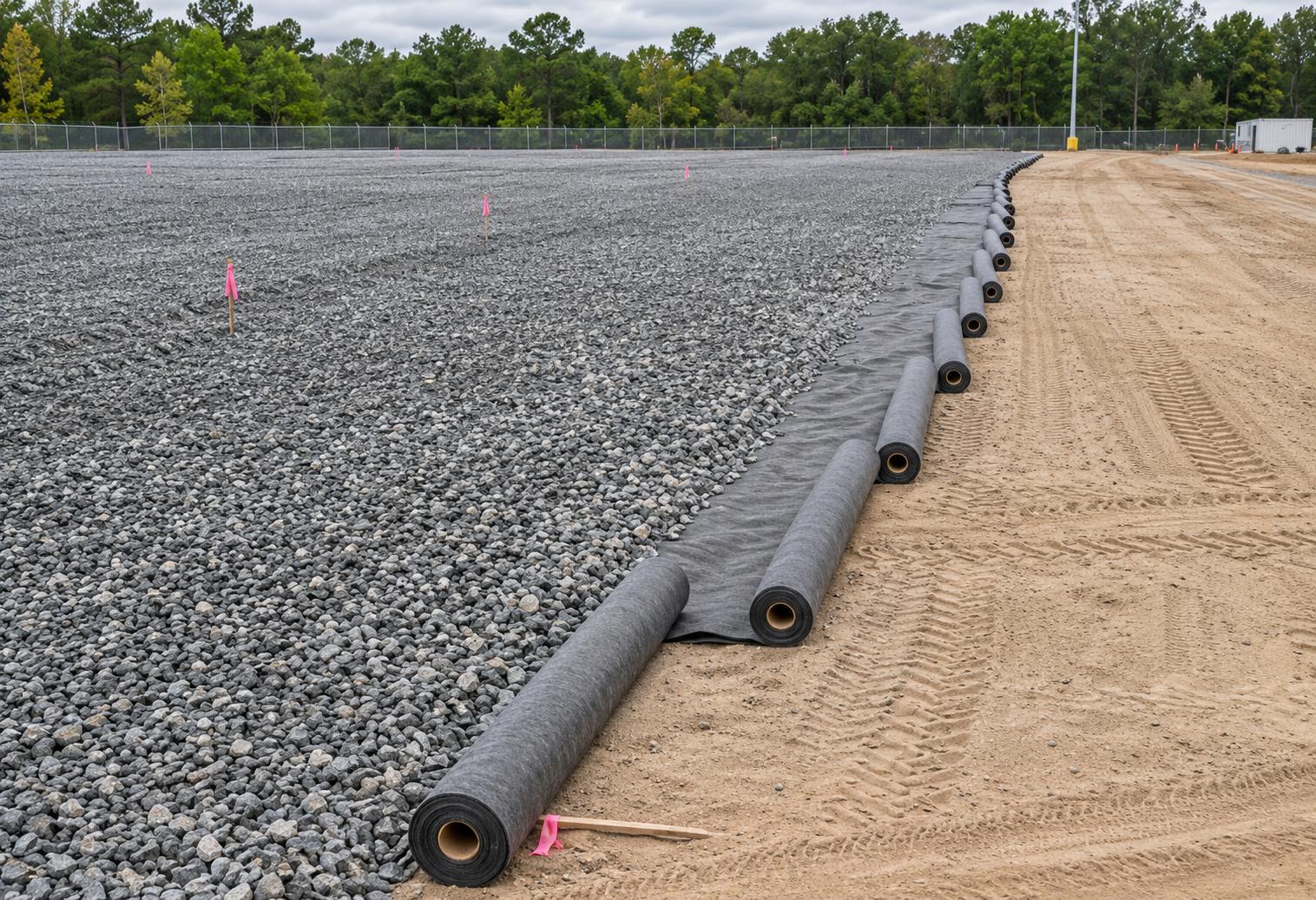
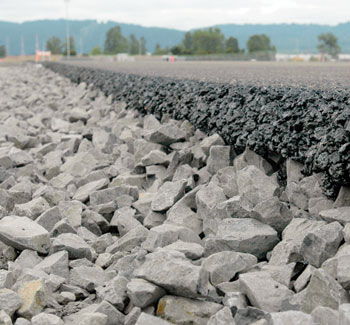
Under the wearing surface sits an infiltration bed of clean, uniformly graded AASHTO No. 3 aggregate, 12 to 36 inches deep with roughly 40 percent void space, wrapped in non-woven polypropylene geotextile. Bed depth is set by storage requirements, frost depth, site grading, and predicted loading. A choker course of AASHTO No. 57 aggregate levels the bed for paving, and continuously perforated HDPE pipe (minimum six-inch inside diameter) distributes runoff across the bed bottom and provides positive overflow.
Feasibility starts with the subgrade. A sand subgrade infiltrates well; dense clay may rule the system out. Where soils drain poorly, the bed can be designed for slow discharge instead. The infiltrated water is cleaner than conventionally managed runoff: total suspended solids, metals, and oils are reduced, treatment of nitrates and phosphates improves, and the system recharges the local aquifer.
12–36″
AASHTO No. 3 infiltration bed under the wearing surface
10–20%
Unit-cost premium over standard asphalt before system savings
2–3×/yr
Vacuum cleaning. No resealing, ever
Decades
Installations from past decades remain functional today
What The Record Shows
Costs, upkeep, winters, and the honest tradeoffs.
The cost math is a system comparison, not a unit comparison
On a unit basis, porous asphalt runs 10 to 20 percent above standard asphalt. The stone bed is deeper than a conventional sub-base and wrapped in geotextile, experienced installers are scarce, and each batch must be produced separately to spec. But the comparison changes once storm water fees and drainage infrastructure enter the analysis. Porous systems eliminate most piping and catch basins, follow the site’s natural topography with less earthwork, and have proven competitive with, and often cheaper than, conventional pavement plus traditional storm water infrastructure.
Maintenance is a discipline, not a burden
The single job is keeping fines out of the void space. Vacuum the surface with a commercial cleaning unit two to three times per year, clean inlet structures annually, and keep equipment from tracking dirt onto the surface. Never seal-coat, and never use pressure washers or compressed air; both degrade the surface. Small soft-spot depressions (declivities) under fifty square feet are patched with standard impervious paving, and the adjacent porous area absorbs the extra runoff.
Winter performance is a strength, not a weakness
Water drains through the surface, so freeze-thaw cycles rarely damage the paving and black ice forms less readily. The stone bed absorbs and retains heat, so freezing rain and light snow melt faster than on conventional pavement. Plowing is fine with the blade set slightly high. Sand and cinders are prohibited (they clog the voids); salt works, though gentler deicers are preferred.
Critical storms are designed for, not hoped against
Infiltration systems are typically sized for two- to ten-year storm events, with the one-in-a-century storm studied in design. The bed carries an overflow control structure so peak rates stay controlled and water can never rise to pavement level. Perforated pipes or French drains spread runoff evenly across the bed and add storage; any bypass must maintain positive outflow.
Where it does not belong
Porous pavement is susceptible to crushing under heavy loads, spill cleanup is harder because the pores absorb contaminants, and highly permeable subgrades can develop anaerobic conditions. Truck loading zones, with frequent spills and heavy axle loads, stay on conventional pavement, with runoff routed through oil-water separators to an adjacent bioswale. Installation goes in as late in construction as possible, on dry surfaces above fifty degrees Fahrenheit, and the finished surface is hose-tested at five gallons per minute to verify direct infiltration.
If installed properly and maintained to the engineer’s specifications, porous pavement has a long lifespan. Existing systems dating back several decades are still functional today.
TDG Water Practice, porous pavement overview
Project Gallery
From the field.
Sample gallery for layout review: eight images. Select any image to open it full size.
Partner With Us
Weighing porous pavement for your site?
Send us your subgrade conditions and loading profile and we will tell you honestly whether it fits.