

Case Study · Air Quality
Three engines. No wasted idle.
At the Honda Port-of-Entry in Richmond, California, GenSet switching locomotives replaced conventional yard power. Measured against a traditional switcher in the same duty: 58 percent less NOx, 80 percent less particulate matter, and roughly 20 percent less fuel.
-
Client
-
Port of Richmond
-
Facility
-
Honda Port-of-Entry
-
Practice
-
Air Quality
-
Program
-
Clean Air Action Plan
The Full Story
From idling switchers to staged power.
The challenge
Switching locomotives do the unglamorous work of a rail yard, and in most yards they idle for long periods between moves while trains are loaded and offloaded. That idling wastes fuel and puts NOx and diesel particulate matter into the air close to workers and neighboring communities.
For the Honda Port-of-Entry project, the Port of Richmond adopted a Clean Air Action Plan covering shipping, trucking, rail, and vehicle handling, with targets of eliminating 50 percent of PM emissions by 2020 and holding NOx at least 5 percent below the baseline project estimate. Yard switching was one of the sources the plan had to address directly.
The approach
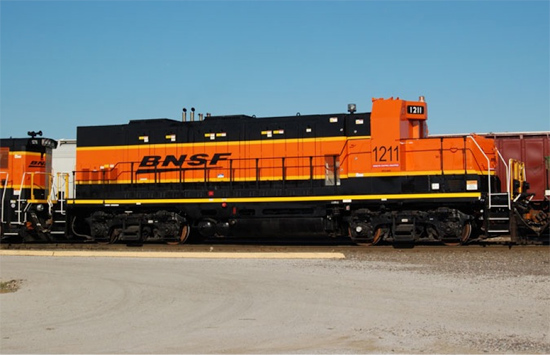
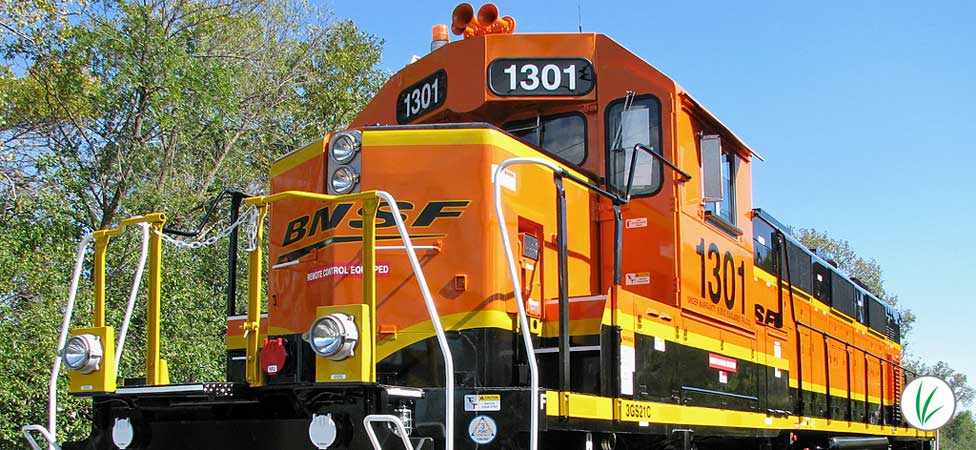
GenSet (generator set) switchers replace one large diesel prime mover with three independent 700 HP Cummins diesel engines under smart-chip control. Each engine starts as fast as a truck engine, so power is engaged only when the work requires it.
The idle management is the point. When demand drops, the first engine shuts down after one minute of inactivity, the second after five minutes, and the third enters sleep mode after fifteen minutes. The locomotive is never burning three engines’ worth of fuel to wait.
The results
Compared to a traditional locomotive in the same application, GenSet units have been shown to reduce NOx by 58 percent, PM by 80 percent, HC by 94 percent, and CO by 37 percent, with fuel savings of about 20 percent over existing diesel switcher technology.
The units also fit the CAAP’s wider framework, which committed the Port to investigating emerging emissions-reduction technologies, sharing findings with peer ports, and publishing a public scorecard of its air-impact monitoring.
Measured Results
Against a conventional switcher in the same duty.
-58%
Nitrogen oxides (NOx)
-80%
Particulate matter (PM)
-20%
Fuel consumption vs existing diesel switcher technology
Project Gallery
In the yard.
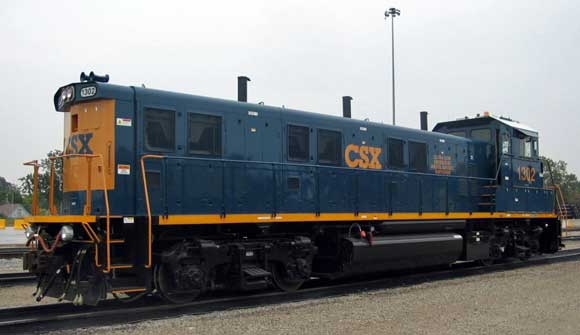
Sample gallery for layout review: three images. Select any image to open it full size.
Partner With Us
Considering GenSet power for your yard?
We can walk you through duty-cycle fit, the idle-management math, and what the Richmond installation showed.