
Practice 04 / 05
Sustainability starts at the master plan.
Most of a terminal’s environmental footprint is fixed before construction starts. Pavement sections, surface reflectivity, water reuse, and material recovery are design-table decisions, and they are cheapest to get right on paper.
The Short Version
LEED was written for buildings. A terminal is mostly pavement.
A distribution terminal is acres of hardscape with a handful of structures on it. Certification systems built around occupied buildings only partly apply. So we borrow the LEED strategies that transfer and add terminal-specific methods, such as zoned pavements, that no building standard covers.
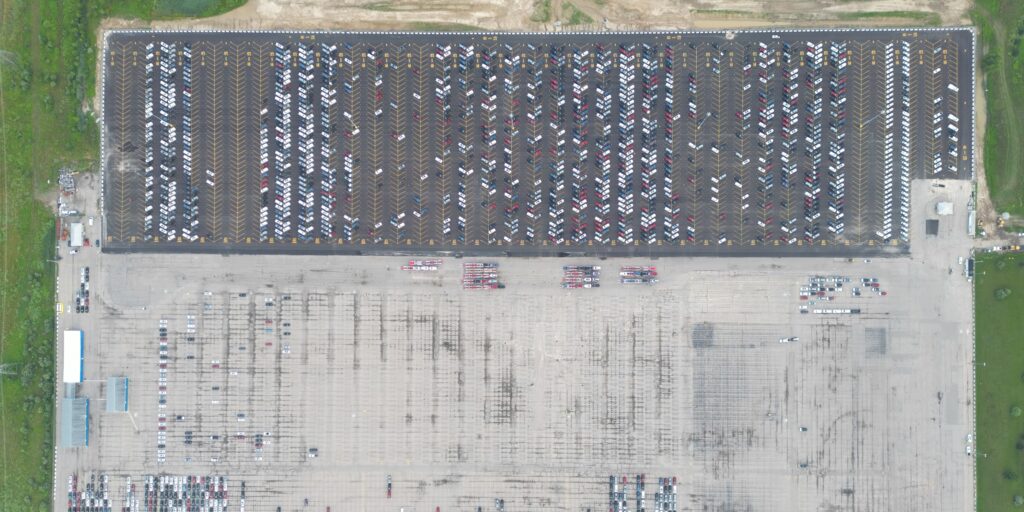
The single biggest design lever is pavement. On a single site, the heaviest required pavement section can be three times the thickness of the lightest, yet many terminals are paved to the heaviest spec everywhere. Matching each zone’s section to its planned use cuts aggregate, asphalt binder, cost, and construction energy in one decision.
3x
Heaviest required pavement section vs lightest on the same site
80%+
Share of a typical automotive terminal used for light vehicle parking
0 vs 35
Solar Reflectance Index scale, from black pavement to white surfaces
20+ yrs
How long a terminal lives with its pavement decisions
Inside This Practice
Critical design moves that payback.
01 · LEED Perspectives
The LEED strategies that carry over
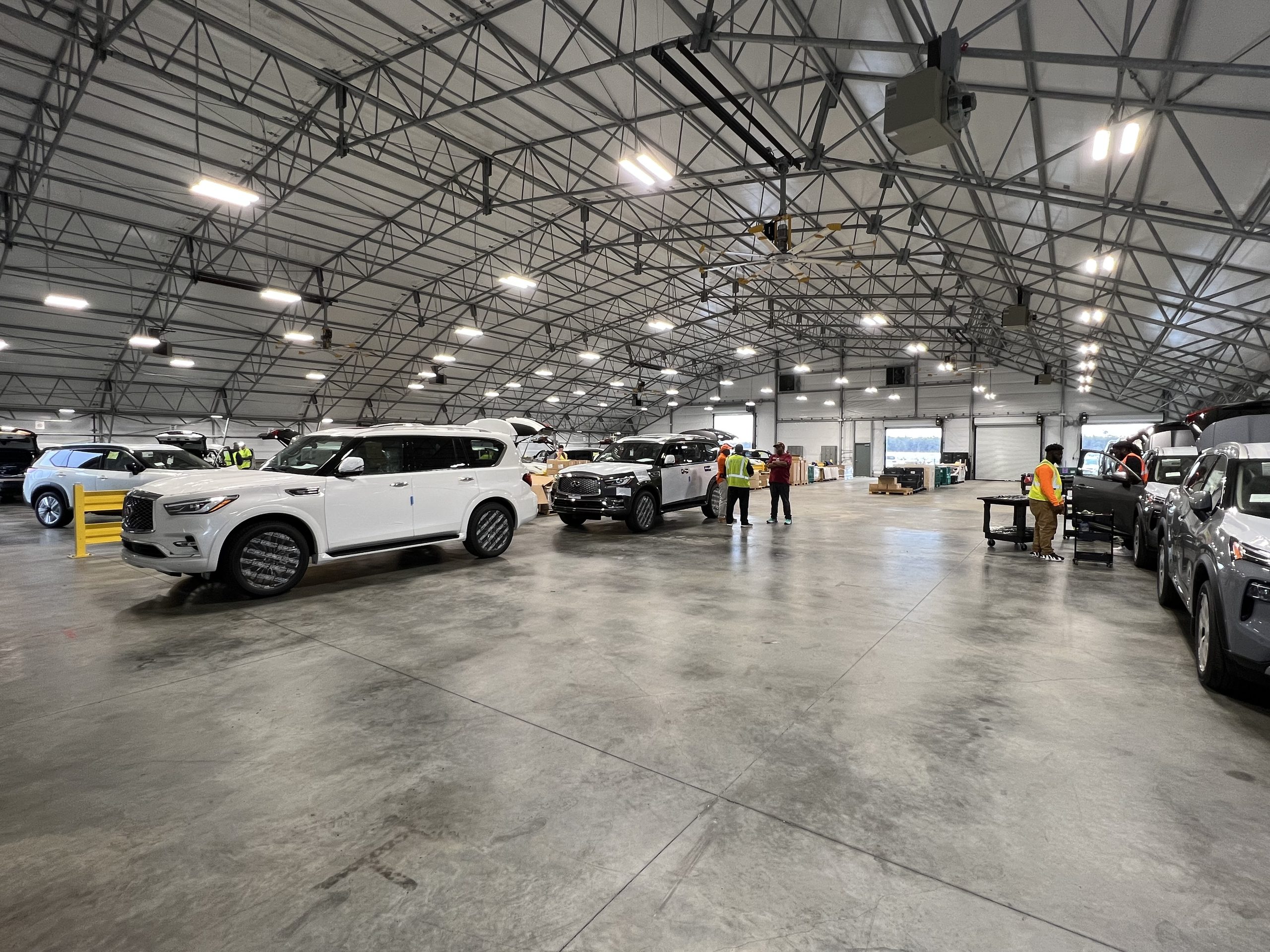
Terminals do have buildings, and building strategies apply there directly. Specify low-global-warming-potential refrigerants in new HVAC&R equipment, as federal rules increasingly require, and plan the replacement of older equipment that still runs on HCFCs or high-GWP HFCs. Natural refrigerants such as water or carbon dioxide avoid the ozone and climate penalties of synthetic ones. Better still, passive design and an efficient envelope shrink the equipment a warehouse or admin building needs in the first place.
Fleet strategies transfer too. Electric or fuel-efficient service vehicles, employee car share, and transit incentives all cut emissions tied to staffing a terminal.
02 · Zoned Pavements
Don’t pave the whole yard for the heaviest truck
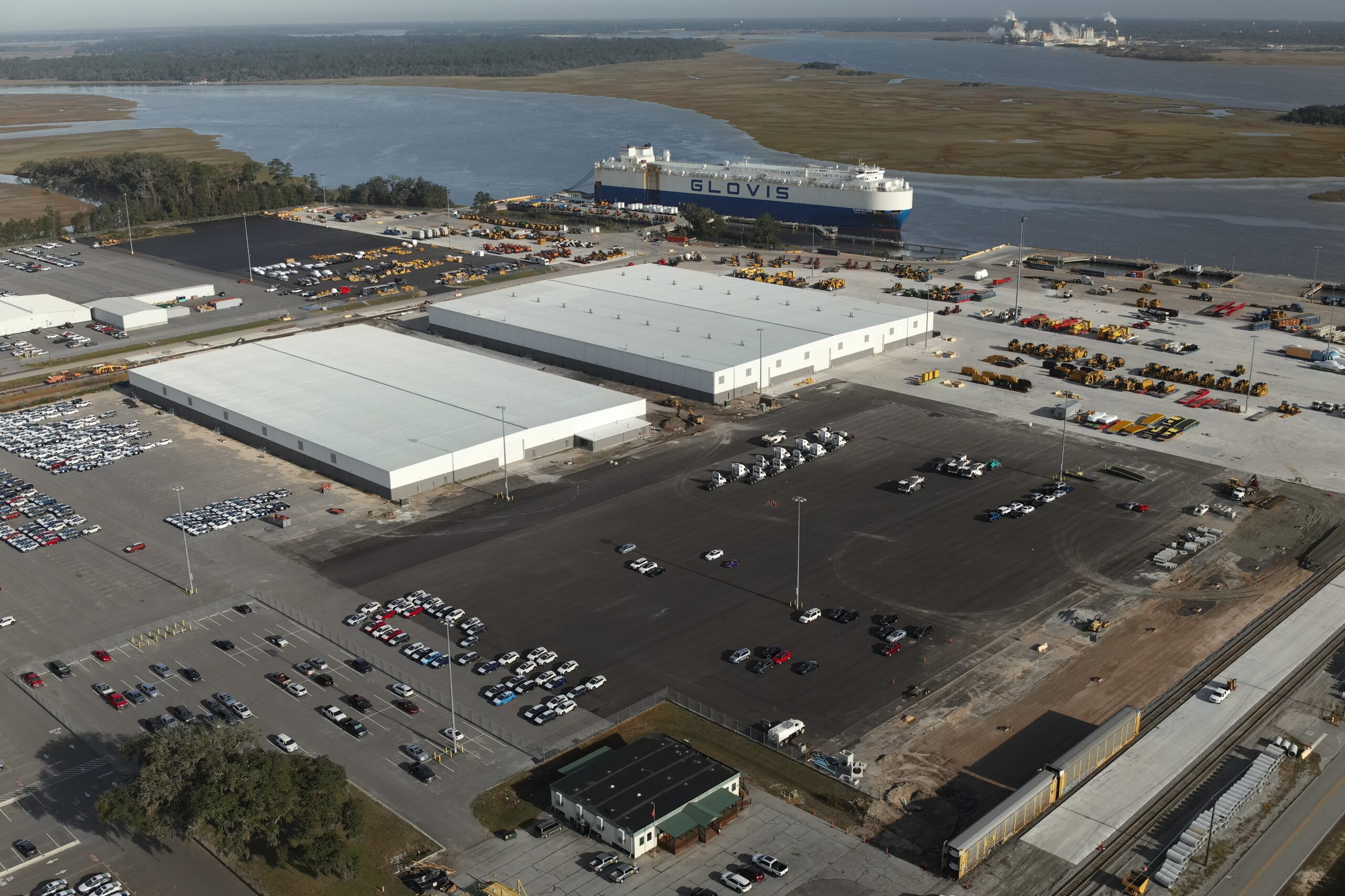
Trucks, transloading equipment, and cargo each load pavement differently, and the required sections vary by up to 3x times across one facility. Yet many US automotive terminals pave the entire site for heavy truck access when over eighty percent of the area is light vehicle parking. Zoned sections match the pavement to the planned use: porous vegetated block for employee parking, porous asphalt across light-duty storage, impervious concrete where the loads demand it.
The prerequisite is a real master plan: operating flows of material, vehicles, and personnel mapped across the site, plus the changes expected within the planning horizon. A pre-planned program to remove and replace the lightest sections during a future rehabilitation is also a legitimate design tool.
03 · High-SRI Surfaces
Lighter surfaces, cooler yards
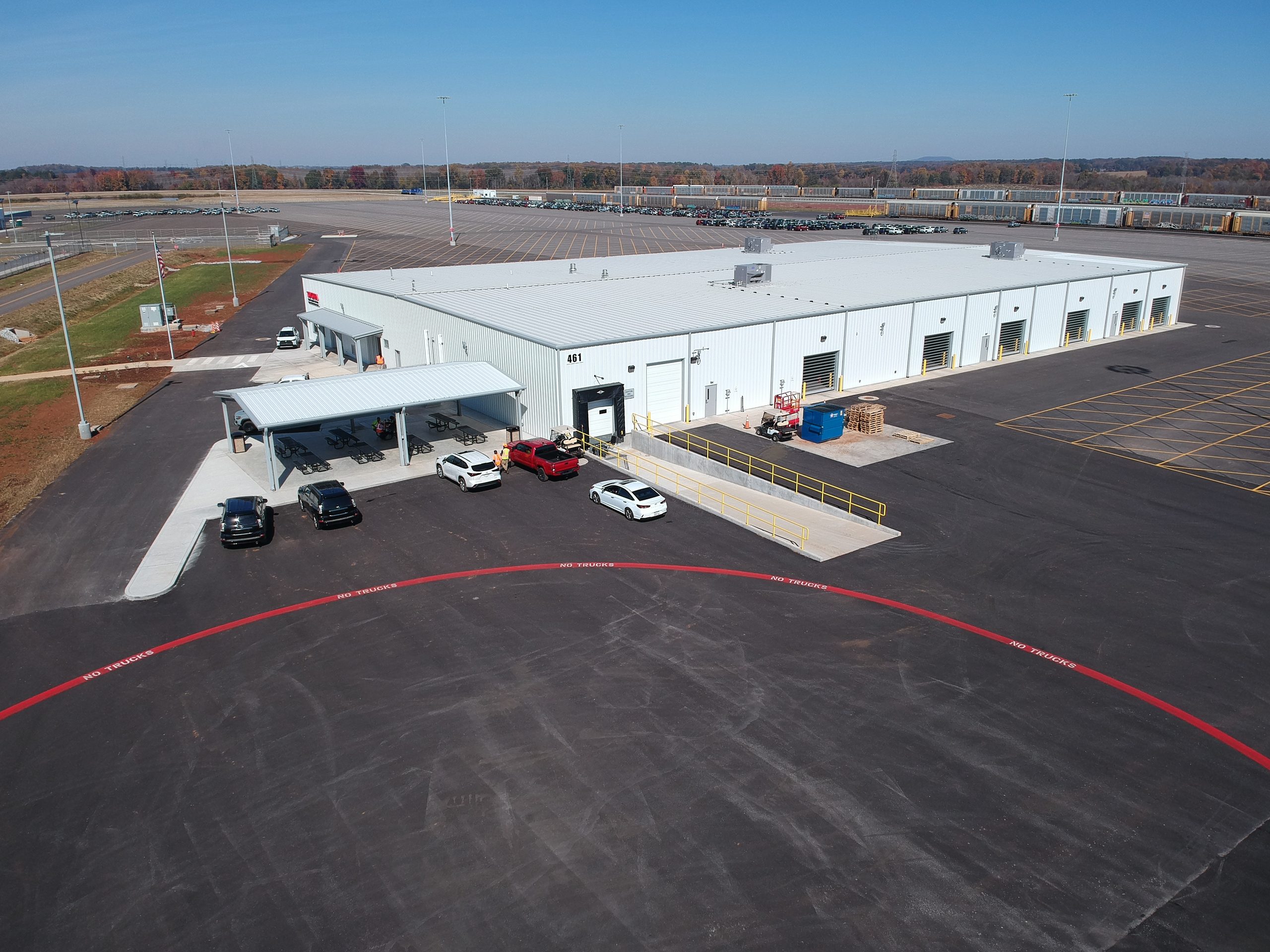
Pavement color is largely fixed by the material the loads require. Roofs are where the choice is real. The Solar Reflectance Index measures how well a surface stays cool in the sun, from 0 for a standard black surface to 100 for a standard white one. A white or light-colored membrane on a warehouse or processing building stays far cooler than a dark roof, cuts the cooling load in the building beneath it, and reduces the heat the site adds to the surrounding area.
On the ground, the levers are shade and open surfaces. Solar canopies over vehicle storage shade the pavement beneath them while generating power. Open grid paving, with grass or gravel cells, runs cooler than solid asphalt, cuts stormwater runoff, and lets water soak into the ground. Where the loads already call for concrete, its lighter color is a side benefit.
04 · Water & Materials Reuse
Capture the rain, grind the old asphalt
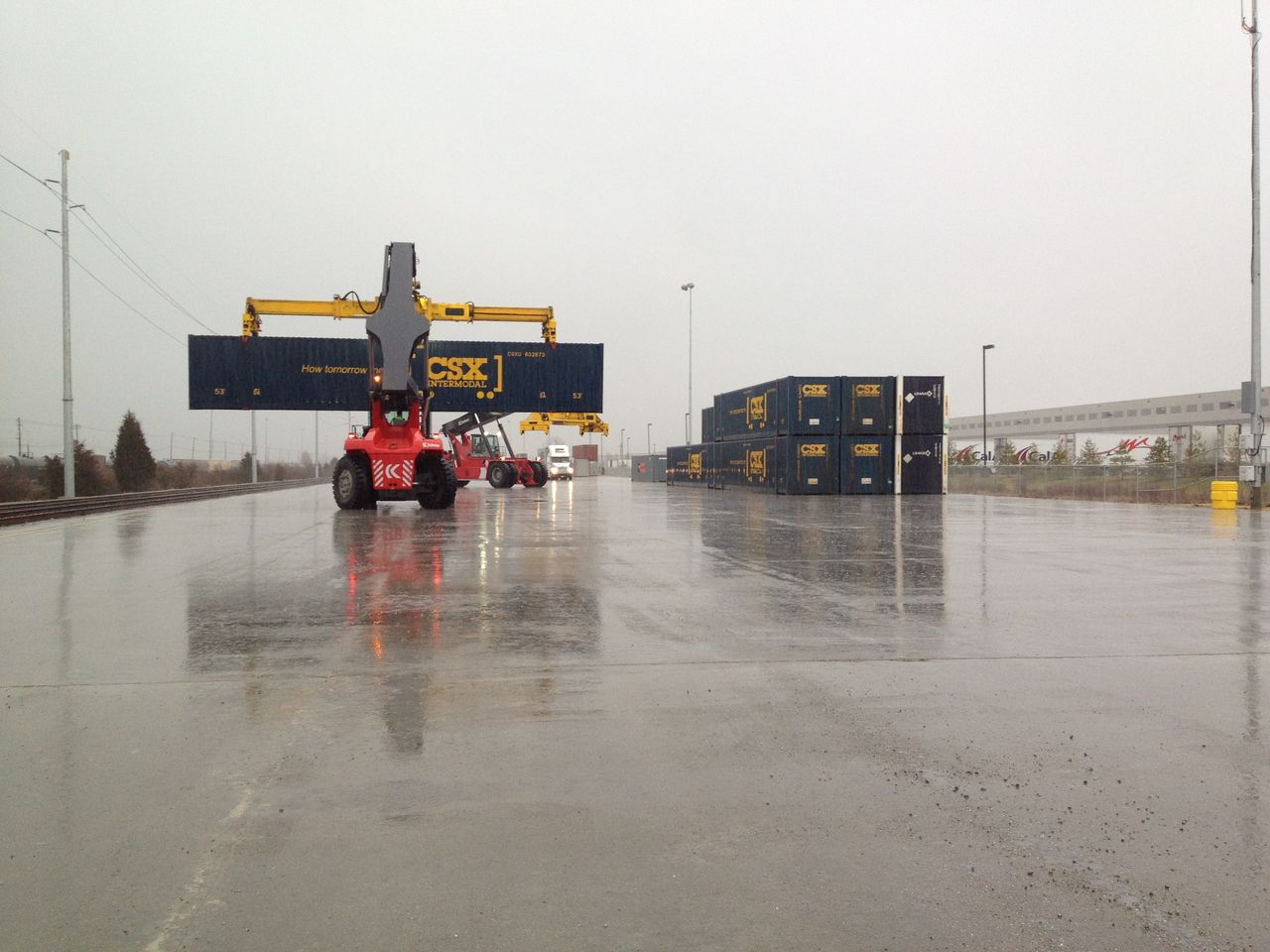
Rainwater harvested from roofs and truck canopies is clean enough that most non-potable uses need only basic filtration and disinfection, subject to local plumbing codes. Stored in a cistern above or below ground, it covers vehicle washing, toilet flushing, and irrigation, which reduces stormwater runoff and lowers potable water bills.
Demolition feeds construction the same way. When existing hardscape is torn up for new paving, the old asphalt can be ground into aggregate for the new base or blended back into the new asphalt mix. That saves money, reduces demand for virgin materials, and keeps the spoil out of the landfill.
Partner With Us
Designing a terminal from a clean sheet?
Bring your operating flows. We will show you where the master plan can cut pavement, heat, and water loads before anything gets built.